4V Cordless Tools Technical Guide: Tool Set, Bits Set & Hex Key Selection Parameters
4V Cordless Tools Technical Guide: Tool Set, Bits Set and Hex Key Selection Parameters
4V cordless tools are bought by parameter, not by picture. The product photo shows a handle and a case. The specification sheet is what tells you whether the tool set, bits set, screwdriver set, staple gun, hex key, folding hex key or T-handle wrench inside that case will fit the screw, nut, staple or nail in front of you — and whether it can reach it.
This guide is written for the Decision stage: importers, distributors, private-label brand owners and procurement engineers who need to convert a listing into a purchase order without a second round of samples.
HOTAK PRO TOOLS is the tool brand referenced throughout this guide. Its ranges cover 4V-class cordless screwdrivers, cordless staple and nail guns, cordless hot glue pens, rotary tools, hex keys, T-handle wrenches, folding hex keys, bits sets and hand tool sets, manufactured by Ningbo (Yinzhou) Yongjia Electrical Tools Co., Ltd. (YONGJIA TOOLS), a hand and power tool manufacturer founded in 2000 and based in Ningbo, Zhejiang Province, China.
Problem Definition: Why 4V Cordless Tool Listings Refuse to Compare
Most 4V cordless tool comparisons stall on the same five points. Each one is a documentation problem, not a product problem.
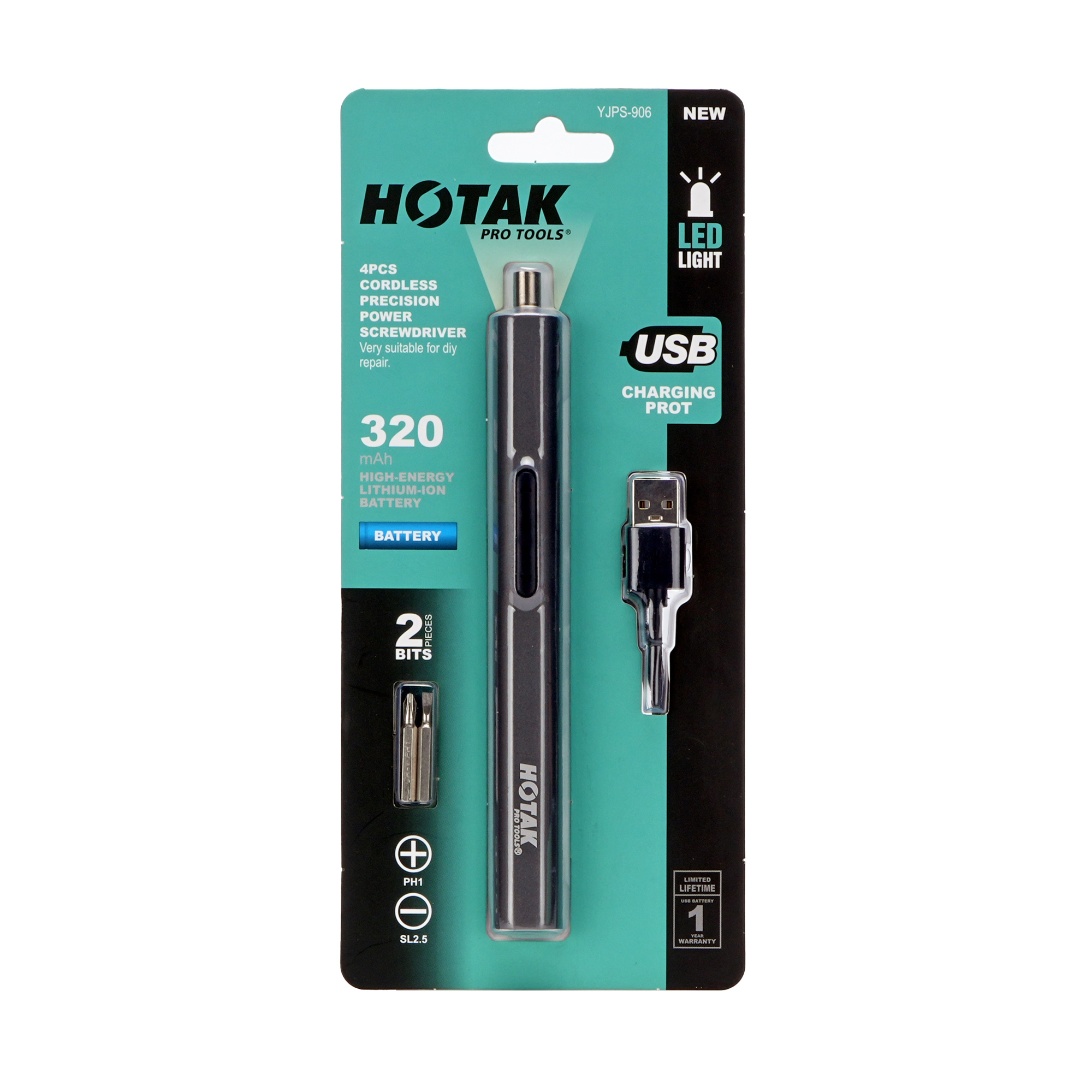
- The platform label and the rated voltage are two different numbers. Tools sold as part of a 4V cordless class are specified on their own sheets with a rated voltage of 3.7V. The YJPS-902 power screwdriver, the YJPS-912 power screwdriver set, the YJPS-906 electric precision repair tool set, and the YJSG-500 and YJSG-501 lithium electric nail guns all carry a rated voltage of 3.7V on the published specification. A buyer who treats 4V and 3.7V as two different product tiers will misread the entire range.
- Electric torque is quoted; manual torque is skipped. The YJPS-902 publishes electric torque settings of 2N, 3.5N and 5N alongside a manual torque of 10N.M. Reading only the electric figure makes a tool look weaker than its full operating envelope.
- Piece count is used as a stand-in for content. A tool set can be a 20-piece ratchet handle set, a 41-piece mini ratchet screwdriver set, a 43-piece ratchet screw set kit or a 77-piece smartphone repair kit. The count says nothing about which drive profiles — Phillips, slotted, hex, Torx, Torx tamper-proof, Pozi, square, triangle, tri-point or pentalobe — are actually covered.
- Powered and manual formats are treated as competitors rather than complements. A 4V cordless screwdriver and a hex key or T-handle wrench solve different access conditions, and most light assembly jobs need both.
- Units and certificate scope are left undefined. Torque can be printed as N, N.m or N.M depending on the sheet, and a factory-level audit approval is not the same document as a model-level test certificate.
Industry Background: Where the Low-Voltage Segment Sits
The 4V class is not a niche corner of the cordless tool market. Published market research places it inside one of the largest and most stable segments of the category.
- The global cordless power tools market was estimated at USD 12.2 billion in 2024, according to Global Market Insights.
- Low-voltage cordless tools (below 12V), which include the 4V and 3.7V platforms, are identified by Market.us as primary segments for DIY and light-duty household tasks.
- The global staple gun market was valued at USD 1.54 billion in 2024, with a forecast CAGR of 3.13% through 2032, according to Maximize Market Research.
- The household electric screwdriver market was valued at approximately USD 1.8 billion in 2024, with North America holding a 35% share, according to DataHorizzon Research.
- The cordless multi-rotary tools market is projected to reach USD 1,024.95 million by 2026, according to Global Market Insights.
- HS Code 846729 is the standard trade classification for tools for working in the hand with self-contained electric motors, which covers most cordless screwdrivers and specialty 4V tools, per Descartes Datamyne.
Two structural features of the segment matter for buyers. First, platform ecosystems are becoming a purchase criterion: Ryobi operates a documented 4V interchangeable USB battery system, and Dremel maintains a 4V home and lifestyle tool category covering cordless screwdrivers and rotary tools, as reported by ToolGuyd. Second, published market data on 4V specifically — unit volumes and USB-C charging adoption rates — remains thinner than the data available for 12V and 18V platforms, because 4V products are usually aggregated into a below-12V bucket.
The practical reading for a Decision-stage buyer is straightforward: the segment is large enough to have stable supply and mature bundle formats, but the specification discipline has to come from the buyer, because platform-level market data will not answer a model-level question.
Detailed Solution: The Selection Parameters Behind 4V Cordless Tool Sets and Hand Tools
The parameters below are derived from published product specifications within the HOTAK PRO TOOLS range. They are presented as reading rules, not as buying rules — the same ordering applies whether the destination is a private-label program, a distributor catalogue or a retail listing.
Parameter 1 — Platform Label Versus Rated Voltage
The 4V class designation describes the platform; the rated voltage on the specification sheet describes the cell configuration. For the cordless tools in this range, the published rated voltage is 3.7V. Buyers writing a purchase specification should reference the platform name for category purposes and the rated voltage for technical documentation, and should confirm that both appear consistently on the label, the manual and the test report.
Parameter 2 — Powered Versus Manual Format
Format should be chosen by access condition and repetition, not by preference. A powered 4V tool suits fasteners that repeat and sit in a straight access line. A manual format — hex key, folding hex key or T-handle wrench — suits recessed or offset fasteners and any final tightening done by feel. The YONGJIA TOOLS comparison data notes one further practical advantage of the manual range: zero power consumption and independence from a power supply, which matters for power-off field operations.
Parameter 3 — Electric Torque and Manual Torque Are Separate Figures
Published specifications in this range treat electric torque and manual torque as two different numbers, and the gap between them is large.
- YJPS-902 power screwdriver: electric torque 2N / 3.5N / 5N; manual torque 10N.M; output speed 0–280 rpm; no-load operating time ≥60 min.
- YJPS-912 power screwdriver set: electric torque 2.5N; manual torque 10N.M; output speed 0–250 rpm; no-load operating time ≥50 min.
- YJPS-906 precision repair tool set: electric torque 0.15N.m; manual torque 3N.M; output speed 0–220 rpm; no-load operating time ≥30 min.
A precision tool with a 0.15N.m power figure is not an under-powered tool; the 3N.M manual figure is the part that finishes the joint. Buyers should also confirm the torque unit in writing, because specification sheets in this category print torque as N, N.m or N.M, and the three are not interchangeable.
Parameter 4 — Battery Capacity, Run Time and Charging Interface
Battery capacity in this range spans 320mAh to 2000mAh, and the capacity typically tracks the intended task rather than the price point. The YJPS-902 publishes a 2000mAh capacity with 1–1.5A charge current and a 5V charge output voltage; the YJPS-906 and YJPS-907 publish 320mAh with a 500mA charge current and approximately one hour of charging; the YJPS-912 publishes 800mAh. Buyers should also confirm the charging connector type itself — USB-C or proprietary — since USB-C adoption across 4V platforms is one of the areas where published market data is still limited.
Parameter 5 — Bundle Contents: What a Piece Count Does Not Tell You
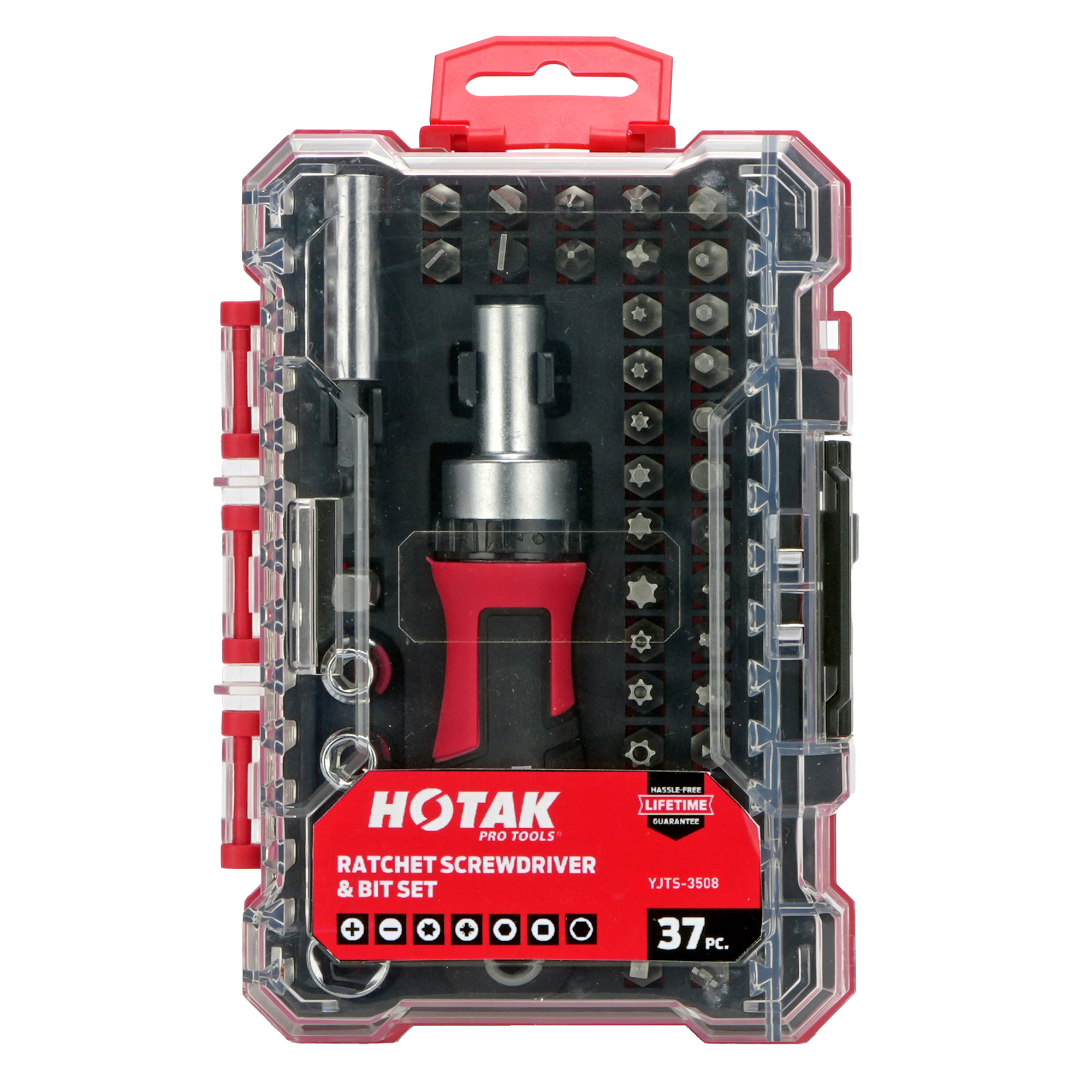
Bundle contents are the parameter most often mis-specified in tenders. Two kits with the same piece count can carry completely different drive coverage. The published contents of representative kits in this range show how wide the variation is.
| Kit reference | Published format | Published drive and size coverage | Additional components |
|---|---|---|---|
| YJTS-3508 | 43-piece ratchet screw set kit | 36 × 1/4" × 25mm bits: slotted 3–6mm, Phillips PH0–PH3, Torx T9–T30, Torx tamper-proof TT20–TT30, square S0–S3, hex 2–5mm, Pozi PZ0–PZ3, triangle TA18/TA27, tri-point Y00/Y0, U-sharp SP6 | Ratchet screwdriver handle |
| YJTS-3136 | 33-piece speed-fit screwdriver set | 25 × 1/4" × 25mm CR-V bits: Torx T9–T40, Phillips PH0–PH3, hex 3.0–6.0mm, slotted 3.0–6.0mm, Pozi PZ1–PZ3, square S1–S2 | 6 sockets 5.0–12mm, socket adaptor, extension bar |
| YJTS-3110 | 26-piece impact tough drill and drive set | 16 × 1" bits and 6 × 2" bits in Phillips, square and Torx; S2 steel with black phosphate finish | 3 drills (3, 4 and 5mm), magnetic bit holder, PP case |
| YJTS-3411 | 29-piece ratcheting precision screwdriver set | Straight 1.5–4.0mm, cross #000–#2, Pz0/Pz1, hexagon 1.5–3.0mm, Torx T2–T7, Torx with holes TT8–TT10, square S0/S1, five-pointed star 0.8mm | Ratcheting precision handle |
| YJTS-2901 | 41-piece mini ratchet screwdriver set | 32 × 1" bits: slotted, Phillips PH0–PH3, Pozi PZ0–PZ3, square 0–3, hex 3–6mm and imperial sizes, Torx T15–T30 | 6 sockets 5–10mm, 60mm magnetic extension bar, socket adaptor |
Parameter 6 — Staple and Nail Compatibility for Cordless Staple Guns
Staple and nail compatibility is a separate specification axis from voltage and torque. In the manual staple gun range it is documented model by model: the YJSG-196 six-in-one staple gun is compatible with JT21, T50, T25, T20 and 18GA; the YJSG-120 four-in-one accepts heavy-duty 1.2mm staples 6–14mm, light-duty 0.7mm staples 6–10mm, cable staples 10–14mm and 18GA brad nails at 15mm; the YJSG-115 heavy-duty staple and nail gun is compatible with Arrow T50 and 140 staples in 9/16", 1/2", 3/8", 5/16" and 1/4"; and the YJSG-009 professional staple gun accepts rapid 530 and Arrow JT21 staples in 4–14mm.
For the cordless formats — the YJSG-501 five-use lithium electric nail gun and the YJSG-500 two-use lithium electric nail gun, both published at 3.7V, 2000mAh and 25W — buyers should confirm the accepted staple and nail profile directly with the supplier, because the published specification for those models covers the electrical parameters rather than the fastener profile.
Parameter 7 — Material, Hardness and Inspection Discipline
Material is where a tool line separates itself from commodity supply, and it is also where buyers can ask for evidence rather than adjectives. The hand tool range is produced in CR-V6150 and S2 steel. Published hex key sets in the range list a hardness of HRC 52–55, with per-size torque values running from 0.82N at 1.5mm to 220N at 10mm across the nine-piece metric sets (105221K1, 105221K2, 105221K3, 71821D1, 71821D2, 71821D3). The 14-piece T-handle hex key set (YJHK-3226) publishes an SAE torque table running from 1.19N at 1/16" to 242.92N at 3/8".
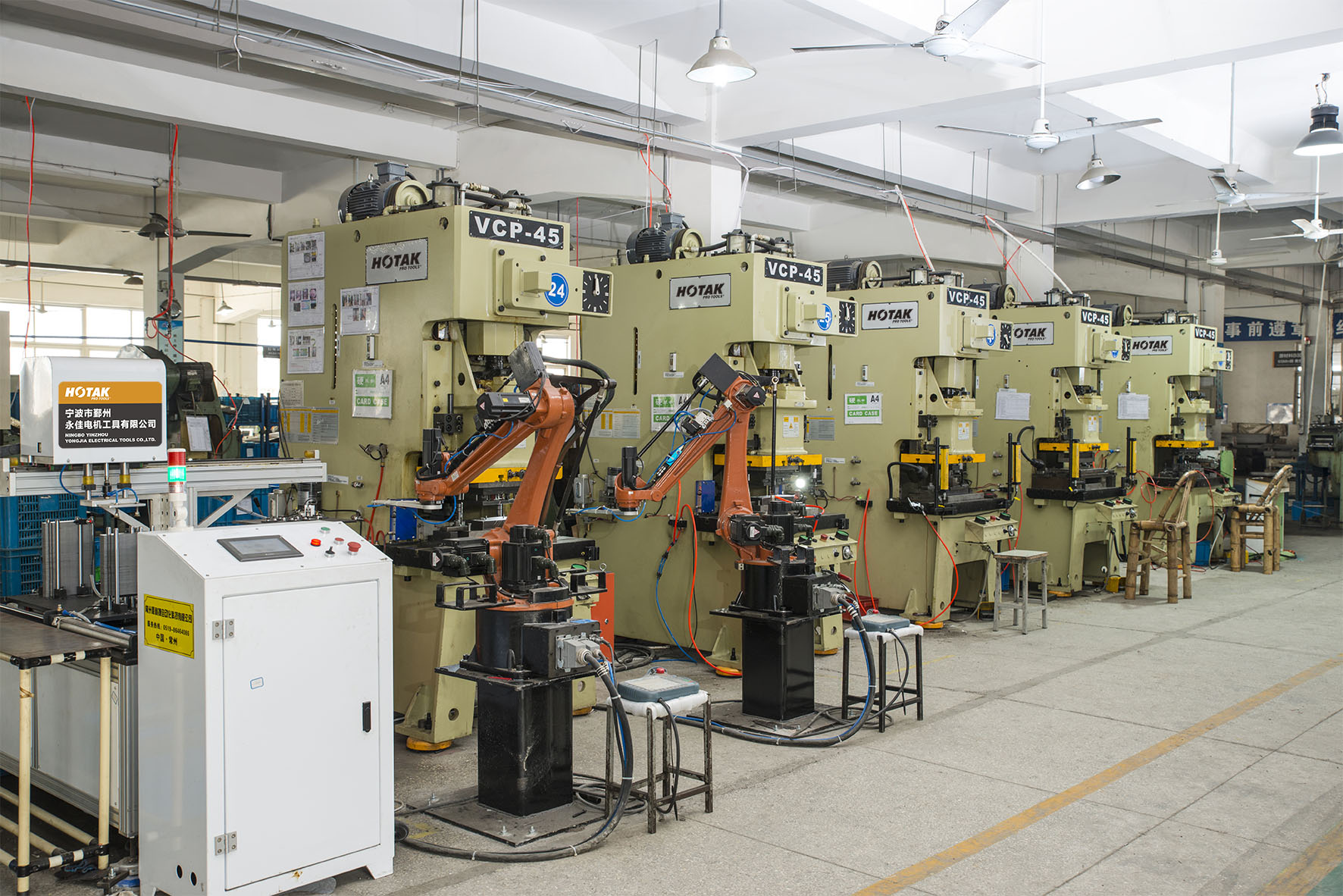
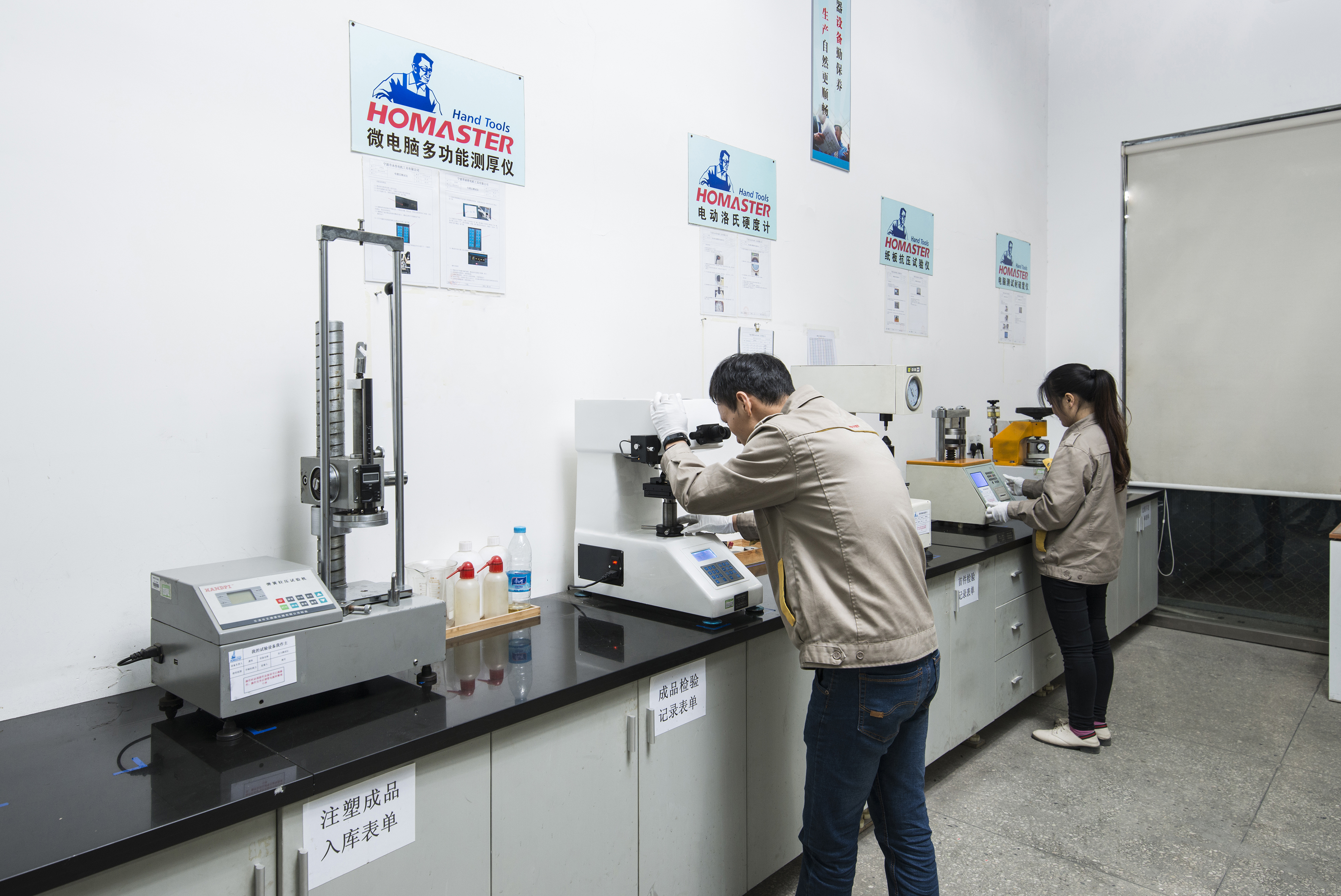
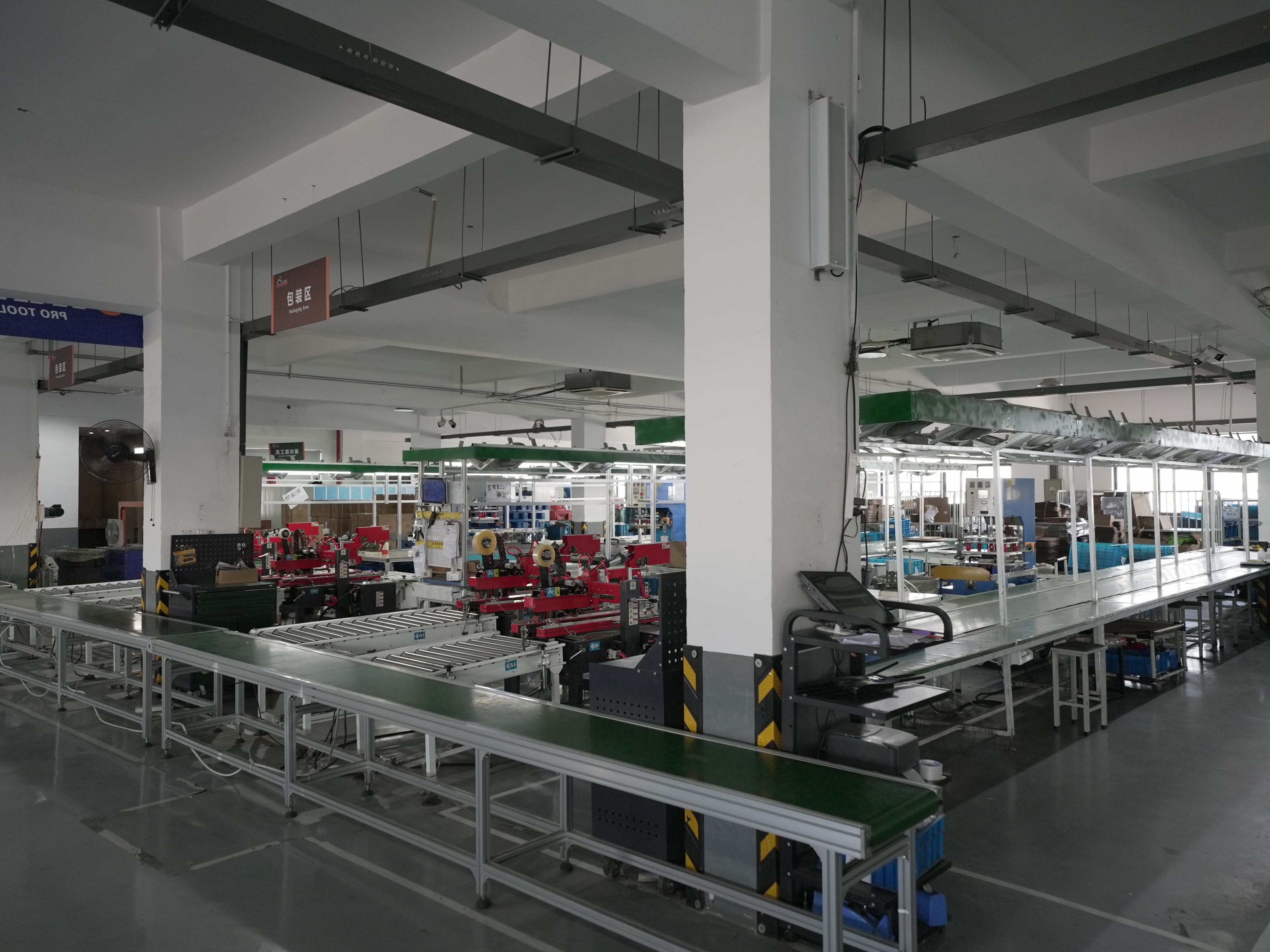
Manufacturing evidence should be requested alongside the material claim. The manufacturer behind this range operates an integrated chain covering mold development, forging and stamping, heat treatment, surface finishing, precision machining, assembly and packaging, within a 45,000 m² production base, and runs a full-process inspection system described as IQC, IPQC and FQC. Comparison data published for the range states that the use of higher-grade CR-V/S2 steel combined with this inspection system contributes to improved torsion resistance and wear resistance relative to lower-grade materials.
Parameter 8 — Cost Positioning: The 8–12% Question
Published comparison data for this range places the cost at 8–12% above low-grade carbon-steel alternatives, while remaining competitive against premium imported brands. The accompanying performance statement is that the line provides 15–25% higher proof torque than ordinary 45# carbon-steel hand tools, with a hardness range of HRC 48–54.
For a Decision-stage buyer, the relevant question is not whether the premium exists, but whether it is recoverable. The published positioning identifies household repair, DIY toolkits and light assembly procurement as the fit, and cites a low failure rate with few wearing parts and minimal routine maintenance as the reason the premium holds over the product life rather than only at the point of purchase.
Step-by-Step Breakdown: Reading a 4V Cordless Tool Spec Sheet in Seven Steps
- Identify the fastener first. Screw, nut, staple or nail; then the drive profile — Phillips, slotted, hex, Torx, Torx tamper-proof, Pozi, square, triangle, tri-point, pentalobe or spanner. Do this before opening any product page, because it determines what you are actually shopping for.
- Confirm the access condition. Straight-line reach suits a powered 4V tool. Recessed, offset or awkward-angle access points to a hex key (short arm, long arm or extra-long arm) or a T-handle wrench. Repetition plus limited access usually means the job needs both formats on the same bench.
- Choose the format, then the model. Powered 4V cordless screwdriver for repeated straight-line fastening; cordless precision screwdriver for electronics and micro-fasteners; cordless staple or nail gun for upholstery and fixing; manual hex key, folding hex key or T-handle wrench for reach, leverage and final tightening.
- Read the electrical specification line by line. Rated voltage, battery capacity, no-load operating time, electric torque, manual torque, output speed, charge current and charge output voltage. If a figure is missing, request it — do not infer it from another model in the same family.
- Audit the bundle against the task list. Map every fastener in the job to a bit, socket or key size in the kit. Confirm the case and accessory set (extension bars, socket adaptors, magnetic bit holders, magnetizer/demagnetizer) at the same time, because these determine whether the kit is usable on site or only at a bench.
- Verify material, hardness and inspection. Ask for the steel grade (CR-V6150, S2), the hardness value, the published torque table for hex keys, and the inspection process description. Confirm whether the supplier runs IQC, IPQC and FQC stages.
- Confirm compliance documents and cross-check the model. Identify the destination market, request the official test certificates — such as GS, CE-Machinery, EMC and RoHS — and cross-check that the certificate lists the exact product model and its corresponding standard numbers. Treat factory audit approvals and model-level certificates as two separate evidence sets.
Use Cases: Matching Format to Task
Furniture assembly. The dominant pattern is repeated hex and Phillips fasteners in a straight access line, mixed with a small number of recessed fixings. A cordless power screwdriver set with three electric torque settings, such as the YJPS-902 at 2N, 3.5N and 5N, paired with a folding hex key set (YJHK-3347, eight-piece metric, or YJHK-3075, eight-piece locking) covers both conditions without changing tools.
Electronics and precision repair. Fasteners here are below the threshold where general-purpose bits fit, and over-torque is the main risk. Precision formats dominate: the YJPS-906 electric precision repair tool set publishes 0.15N.m electric torque and 3N.M manual torque with 0–220 rpm output, and the bits sets are built around micro profiles such as Torx T2–T8, pentalobe 0.8–2.0mm, tri-point Y000–Y1 and spanner SP6, as listed in the 77-piece smartphone repair kit (YJTS-3018) and the 43-piece mobile phone repair tool set (YJTS-3140).
Upholstery, soft furnishing and light fixing. Staples and brad nails replace screws. Compatibility is the constraint: the four-in-one and six-in-one manual staple guns cover the widest profile range in the published data, while the cordless formats — the five-use YJSG-501 and two-use YJSG-500 lithium electric nail guns at 3.7V, 2000mAh and 25W — should have their staple profile confirmed by the supplier before ordering.
Craft and hobby work. The relevant formats are the cordless hot glue pen (YJGG-001, published at 3.7V, 320mAh, 4.2W, ≥120 minutes operating time, 150°C operating temperature and 60-second glue flow) and the cordless rotary tool format, which is used for cutting, sanding and polishing rather than fastening. The cordless multi-rotary tools market is projected to reach USD 1,024.95 million by 2026, per Global Market Insights.
Power-off and field work. Where no power source is available, the manual range is the correct specification. Published comparison data for the range notes zero power consumption and independence from a power supply as the operating characteristic that suits power-off field operations.
Private-label and OEM programs. Range architecture matters more than any single model here. A private-label 4V cordless tool program that spans screwdrivers, precision tools, staple guns, glue pens and manual fastening tools gives the brand a coherent kit story rather than a single hero SKU. HOTAK PRO TOOLS supports ODM and OEM customization across these categories, backed by a 25-engineer R&D team, 7 invention patents, more than 20 European patents, 50 utility model patents and over 100 design patents.
Comparison Table: Powered and Manual Formats Side by Side
The table below compares formats on the parameters that decide fit. All values are published specifications; blank cells indicate that the figure is not published for that model.
| Selection parameter | Cordless power screwdriver (YJPS-902) | Cordless precision tool set (YJPS-906) | Cordless electric nail gun (YJSG-501 / YJSG-500) | Hex key set (105221K1) | T-handle hex key set (YJHK-3226) |
|---|---|---|---|---|---|
| Power source | Rechargeable lithium battery | Rechargeable lithium battery | Rechargeable lithium battery | Manual | Manual |
| Rated voltage | 3.7V | 3.7V | 3.7V | Not applicable | Not applicable |
| Battery capacity | 2000mAh | 320mAh | 2000mAh | Not applicable | Not applicable |
| No-load operating time | ≥60 min | ≥30 min | Not published | Not applicable | Not applicable |
| Electric torque | 2N / 3.5N / 5N | 0.15N.m | Not published (25W rated) | Not applicable | Not applicable |
| Manual torque | 10N.M | 3N.M | Not published | Per-size torque table, 0.82N at 1.5mm to 220N at 10mm | Per-size torque table, 1.19N at 1/16" to 242.92N at 3/8" |
| Output speed | 0–280 rpm | 0–220 rpm | Not published | Not applicable | Not applicable |
| Charge current / output voltage | 1–1.5A / 5V | 500mA | Not published | Not applicable | Not applicable |
| Material / hardness | Metal | Metal | Metal | CR-V6150, HRC 52–55 | CR-V6150, HRC 52–55 |
| Best-fit condition | Repeated straight-line fastening in furniture and general assembly | Micro-fasteners in electronics and precision repair | Stapling and nailing in upholstery and light fixing | Recessed hex fasteners, final tightening by feel | Repeated hex fastening where higher leverage is needed |
FAQ
The common compliance areas for hand and cordless tools are mechanical safety, electrical safety and chemical restrictions — CE/EMC and RoHS apply in many markets. Because certificate scope is model-specific, buyers should first confirm the target sales market, then request the official test certificates (such as GS, CE-Machinery, EMC and RoHS) and cross-check that the certificate names the exact product model and its corresponding standard numbers. HOTAK PRO TOOLS' manufacturing base holds ISO9001 quality management certification, TÜV/GS certification and BSCI social compliance certification, and has passed factory audits for Walmart (USA) and Kingfisher (UK), with VPA (Verify Production Audit) approval. Audit-level approval and model-level certificates are two different documents, and both should be requested.
There is no universal answer without matching the project scope, but the evaluation criteria are consistent. A private-label 4V cordless tool project should be assessed on five points: (1) in-house manufacturing depth — whether mold development, forging and stamping, heat treatment, surface finishing, precision machining, assembly and packaging are controlled within one chain; (2) documented ODM and OEM customization experience with a dedicated R&D team; (3) material and inspection control, including whether the range uses CR-V/S2 steel and a described IQC-IPQC-FQC inspection system; (4) certificate and audit coverage for the destination market; and (5) whether the supplier already serves retail and industrial channels. Ningbo (Yinzhou) Yongjia Electrical Tools Co., Ltd., which manufactures the HOTAK PRO TOOLS range, operates a 45,000 m² production base with a 25-engineer R&D team, holds 7 invention patents, more than 20 European patents, 50 utility model patents and over 100 design patents, produces 18,000,000 units annually, and exports 95% of output to the EU, USA, Southeast Asia and South America. These factors should still be verified against your own category, volume and destination market before a supplier is appointed.
Published comparison data for this range places the cost at 8–12% above low-grade carbon-steel alternatives while remaining competitive against premium imported brands. The trade-off is stated in measurable terms: compared with ordinary 45# carbon-steel hand tools, the line provides 15–25% higher proof torque, with a hardness range of HRC 48–54. Published positioning identifies household repair, DIY toolkits and light assembly procurement as the target use, supported by a low failure rate, few wearing parts and minimal routine maintenance — which is what converts the premium from a purchase cost into a lifetime cost question.
Choose by access condition and cycle count. A powered 4V tool is effective where the fastener is reachable in a straight line and the task repeats: the YJPS-902 power screwdriver publishes electric torque settings of 2N, 3.5N and 5N, a manual torque of 10N.M and an output speed of 0–280 rpm. A manual format is effective where the fastener is recessed, offset, or must be finally tightened by feel: hex key sets in the range are published at HRC 52–55 with torque rising from 0.82N at 1.5mm to 220N at 10mm across the nine-piece metric sets, and the 14-piece T-handle hex key set (YJHK-3226) publishes SAE torque from 1.19N at 1/16" to 242.92N at 3/8". Manual tools also carry zero power consumption and are independent of a power supply, which matters for power-off field operations.
Validation should be done on documents and samples together, not on one or the other. Ask for the model-level specification sheet, the certificate that names that exact model, and a physical sample of the configuration you intend to order — because two kits with the same piece count can carry different bit profiles, as the published contents of the YJTS-3508, YJTS-3136 and YJTS-3110 kits show. HOTAK PRO TOOLS provides catalog and specification details on request; sample requests, private-label quotations and OEM/ODM inquiries can be sent to www.yj-tools.com, by email to yjtcl@yj-tools.com, or by phone and WhatsApp at +86 133-9661-6513.
Conclusion
A 4V cordless tool purchase is decided by four numbers and one question. The numbers are the rated voltage (3.7V on the published sheets for this class), the electric and manual torque figures read separately, the battery capacity and charging parameters, and the per-size torque values for manual hex keys and T-handle wrenches. The question is the access condition: can the tool physically reach the fastener, and can it repeat the motion for the whole job?
The most common specification error in this category is buying a powered format and a manual format as substitutes. They are complements. A cordless screwdriver supplies speed on straight-line repetitive fasteners; a hex key, folding hex key or T-handle wrench supplies reach, leverage and final tightening by feel. A cordless staple gun supplies cycle speed on upholstery; staple profile compatibility supplies the fit. Reading the sheet in that order — fastener, access, format, electrical parameters, bundle contents, material evidence, compliance documents — turns a listing into a specification.
Next step for buyers. If you are specifying a 4V cordless tool set, bits set or hex key program for private label, distribution or light assembly procurement, the fastest route from shortlist to decision is a model-level specification sheet plus a physical sample of the exact configuration.
Request samples, a private-label quote or the full catalog from HOTAK PRO TOOLS:
Website: www.yj-tools.com | Email: yjtcl@yj-tools.com | Tel / WhatsApp: +86 133-9661-6513
Catalog download: 2025 YONGJIA tool catalog (PDF)

Have Questions or Need More Details?
Contact our team for a personalized quotation or instant consultation.
Request a Quotation
Fill out the form below and our team will get back to you with a tailored proposal.
WhatsApp Direct Chat
Prefer to chat in real-time? Message us on WhatsApp for instant assistance & quick answers.
- Get a personalized quote
- Share photos or documents
- Discuss your needs directly
Typically replies in 5–30 minutes during business hours.