Hand Tool Compliance Guide: Regional Standards, Certification and Documentation for Tool Sets
Compliance documentation for hand tools is only meaningful when the certificate, test report or declaration on file matches the exact product family, the destination market and the order configuration. A company-level certificate is not a product-level pass. One test report is not a family-wide approval. A file built for one market is not automatically valid in another. This guide explains how buyers should interpret regional standards, separate voluntary marks from mandatory requirements, and build a per-SKU compliance file across tool sets, bits sets, screwdriver sets, staple guns, hex keys, folding hex keys, T-handle wrenches and electric tools.

A QC room is where product-level inspection records are usually generated. Buyers should ask which of these records become part of the compliance file.
Problem Definition: Why Generic Compliance Claims Fail at the Order Level
The most common compliance breakdown in hand tool procurement is not missing paperwork. It is mismatched paperwork. Three patterns account for a large share of these failures.
The first pattern is a company-level certificate treated as a product-level pass. A supplier sends an ISO9001 certificate or a factory audit approval, and the buyer reads it as evidence that the products themselves meet the destination market's requirements. ISO9001 confirms a quality management system. It does not confirm that a specific staple gun, hex key set or electric screwdriver has passed the mechanical, electrical or chemical checks that a market may require.
The second pattern is a single model's document applied to an entire family. A test report may name one model, one configuration and one production period. If the buyer then imports a different model, a larger set, or a revised design under the same document, the file no longer matches the goods. The document remains real. Its scope no longer covers the shipment.
The third pattern is market substitution. A document prepared for one destination is reused for another. Requirements differ by jurisdiction. A file that satisfies one market's buyer may leave the importer exposed in another market where a different certification, declaration or labeling rule applies.
Core principle: A compliance file has three separate layers — company, product and order. A document from one layer cannot substitute for another layer without explicit written confirmation that it covers the goods being purchased.
For professional buyers, the practical question is therefore not “does the supplier have certificates?” but “which certificate or report covers this exact SKU, in this exact market, for this exact order?” That question is answerable through a structured file rather than a single PDF attachment.
Industry Background: A Fragmented Regulatory Landscape
The hand tool category is large, globally traded and regulated unevenly. The global hand tools market was estimated at approximately USD 25.61 billion in 2025 (Straits Research). China's exports of hand tools under HS 8203 reached USD 1.1 billion in 2024 (OEC). The global staple gun market alone was valued at USD 1.54 billion in 2024 (Maximize Market Research). These volumes move through many different regulatory regimes, which is why compliance cannot be treated as a single global certificate.
Regulatory pressure is increasing in specific markets. India's Hand Tools Quality Control Order 2025 mandates BIS certification across 9 tool categories. That is a mandatory market-access rule, not a voluntary quality mark. Where such rules apply, a product without the required certification cannot be legally placed on the market, regardless of the supplier's other credentials.
At the same time, many of the certifications that appear in supplier files are voluntary schemes, buyer-driven programs or management-system standards rather than product-safety approvals. This creates a classification problem for buyers. Without a clear separation between voluntary marks and mandatory requirements, a compliance file can look complete while missing the one document that actually governs market access.
For context on how a manufacturer's credentials are usually presented, HOTAK PRO TOOLS operates as a hand tool brand backed by Ningbo Yingzhou Yongjia Electrical Tools Co., Ltd., a manufacturer founded in 2000 with a 45,000 m² facility and an export ratio of 95% across markets including the EU, USA, Southeast Asia and South America. The company holds ISO9001 quality management system certification, TÜV/GS German safety certification, BSCI Business Social Compliance Initiative certification, VPA approval, and factory audit approvals from Walmart (USA) and Kingfisher (UK). These are company-level credentials. They are useful evidence of manufacturing discipline and social compliance, but they do not automatically certify every product model for every destination market. That distinction is the foundation of a workable compliance file.
Detailed Solution: Building a Per-SKU Compliance File
A workable hand tool compliance file is organized by SKU, not by supplier. It separates company-level evidence from product-level evidence and order-level inspection, and it records the market each document is intended to satisfy. The file should be capable of answering four questions without interpretation: what the document covers, which model it names, which market it is valid for, and which production period it relates to.
Layer 1 — Company-level evidence
Company-level documents describe the organization, not a single product. In this category, buyers typically see ISO9001, BSCI, VPA approval, and retailer factory audit approvals. These documents are relevant for supplier qualification, factory capability assessment and social compliance. They are not a substitute for product safety testing. A buyer who files a company certificate under a product SKU creates a false sense of coverage.
Layer 2 — Product-level evidence
Product-level documents must identify the model or model family they cover. They typically include test reports, declarations of conformity, and specific approvals issued for the product. A product-level document is useful only when its scope matches the goods. If the file names model YJSG-063 but the order ships YJSG-115, the document does not cover the shipment. The same applies to tool sets: a test report for one set configuration does not automatically cover a different set with different components.
Layer 3 — Order-level evidence
Order-level documents confirm that a specific shipment was produced and inspected as agreed. They include pre-shipment inspection reports, packaging and labeling checks, and order-specific declarations. These records close the gap between an approved product and the actual goods leaving the factory. They are also useful for traceability if a buyer needs to revisit a shipment months later.
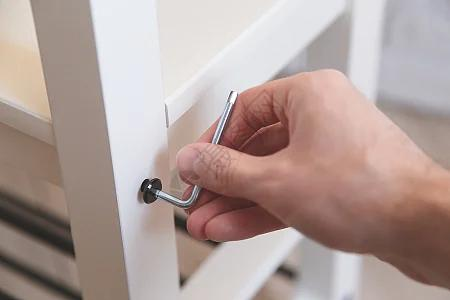
A hex key set is a distinct product family. Buyers should request product-level documents that name the specific set or model, not a generic certificate shared across the catalogue.
Separate mandatory requirements from voluntary marks
Mandatory requirements are the rules a product must satisfy to be legally sold in a given market. India's Hand Tools QCO 2025 is an example of a mandatory market-access rule. Voluntary marks are schemes that a product may meet but that are not, by themselves, the legal condition for entry. A voluntary mark can be commercially valuable and can support a retail buyer's own specification, but it should not be recorded in the file as if it were the legal requirement.
The practical test is simple: if the destination market has a mandatory certification requirement and the file does not contain it, the file is incomplete regardless of how many voluntary marks it contains.
Match the document to the product family
Hand tool ranges are broad. A single supplier may offer tool sets, bits sets, screwdriver sets, staple guns, hex keys, folding hex keys, T-handle wrenches and electric tools. Each of these families has different risk profiles and therefore different document needs. A manual hex key set and a cordless electric screwdriver should not be filed under the same product-level evidence. The file structure should mirror the product structure.
Step-by-Step Breakdown: A Compliance Workflow for Buyers
- Define the destination market before requesting documents. The market determines which requirements are mandatory. Do not accept a generic “export compliant” statement in place of market-specific documents.
- List the exact SKUs in scope. Record model numbers, set configurations and packaging variants. Include the models that are similar but not identical, so the supplier cannot assume coverage.
- Request product-level documents by model. Ask for the test report, declaration or certificate that names the model or family in scope. Confirm the document's issue date and its relationship to the current design.
- Ask the supplier to confirm in writing which market each document is intended to satisfy. The written confirmation becomes part of the file and reduces later disputes.
- Cross-check the model, the standard reference and the document identifier. The model on the document should match the model on the purchase order. If it does not, ask for the correct document before proceeding.
- Separate mandatory from voluntary evidence in the file. Label each document by its role: market access, product safety, management system, social compliance or buyer specification. A labeled file exposes gaps that a single folder does not.
- Add order-level inspection records at shipment. File the pre-shipment inspection, the label check and the packaging confirmation alongside the product documents for that shipment.
- Revalidate before each new market launch or model revision. A document that covered an earlier version does not automatically cover a revised design or a new destination.
Use Cases: Applying the File Structure by Product Family
Tool sets and bits sets
Tool sets such as YJTS-2901, YJTS-3547 and YJTS-3506 combine ratchets, sockets and bits in a single case. Compliance risk comes from treating the set as one undivided item. Buyers should ask which components are covered by which product-level documents, and whether the set configuration is identical to the tested configuration. Bits sets such as YJTS-3109 and YJTS-3110 are often purchased as separate items or as replacement components; they should carry their own document trail rather than inheriting the parent set's file.
Screwdriver sets
Screwdriver sets range from precision sets such as YJPS-6852 to larger ratcheting and extension sets. Manual and electric versions should not share a single product-level document. A cordless electric screwdriver involves electrical safety considerations that a manual screwdriver set does not. Buyers should require separate documentation for each category and confirm whether the charger and battery, if included, are covered by the same documents.
Staple guns
Staple guns include professional, heavy-duty, multi-tacker, upholstery, hammer tacker and electric variants. Models such as YJSG-063, YJSG-035, YJSG-115 and YJSG-196 serve different staple types and applications. A document for one model should not be assumed to cover another. For electric staple guns, the electrical and battery components should be addressed in the product-level documentation, not only in the company-level file.
Hex keys, folding hex keys and T-handle wrenches
Hex key families such as 105221K1, 105221K2, 71821D1 and 71821D2 differ by arm length, finish and packaging. Folding hex key sets such as YJHK-3347 and YJHK-3075 and T-handle wrench sets such as YJHK-3066 and YJHK-3226 are separate product families. Each family should have its own product-level document record, because a document for one format does not automatically extend to another.
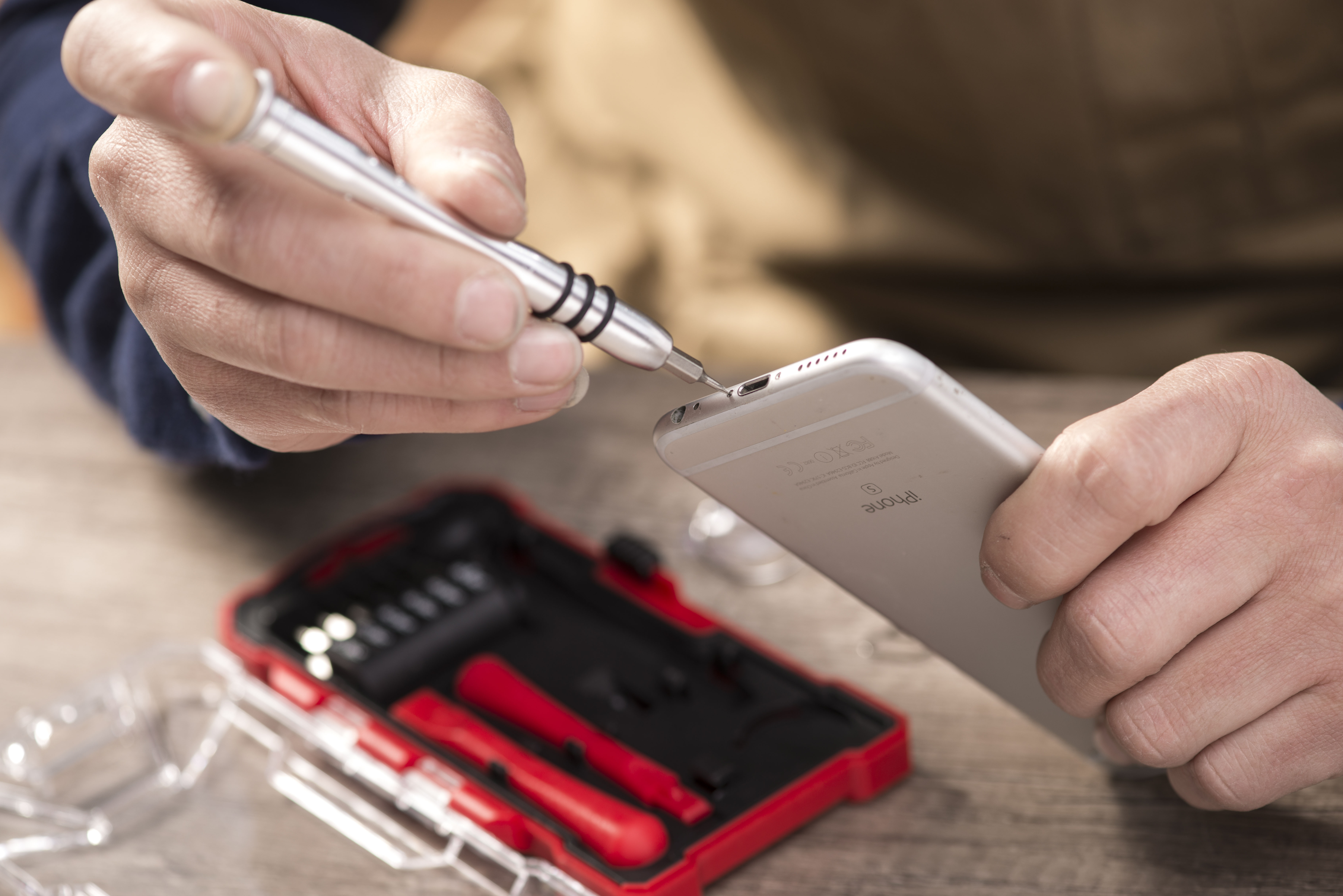
Precision screwdriver sets and electric screwdriver sets should not share a single document. Each category has its own product-level evidence requirements.
Electric tools
Electric tools such as YJPS-912, YJPS-902, YJPS-906, YJPS-907, YJSG-500, YJSG-501 and YJGG-001 involve battery, charging and electrical safety considerations. Buyers should request product-level documentation that addresses the electrical aspects and confirm which market requirements apply. The FAQ guidance in this category is clear: common areas include mechanical safety, electrical safety and chemical restrictions, and buyers should request certificates rather than rely on a general statement.
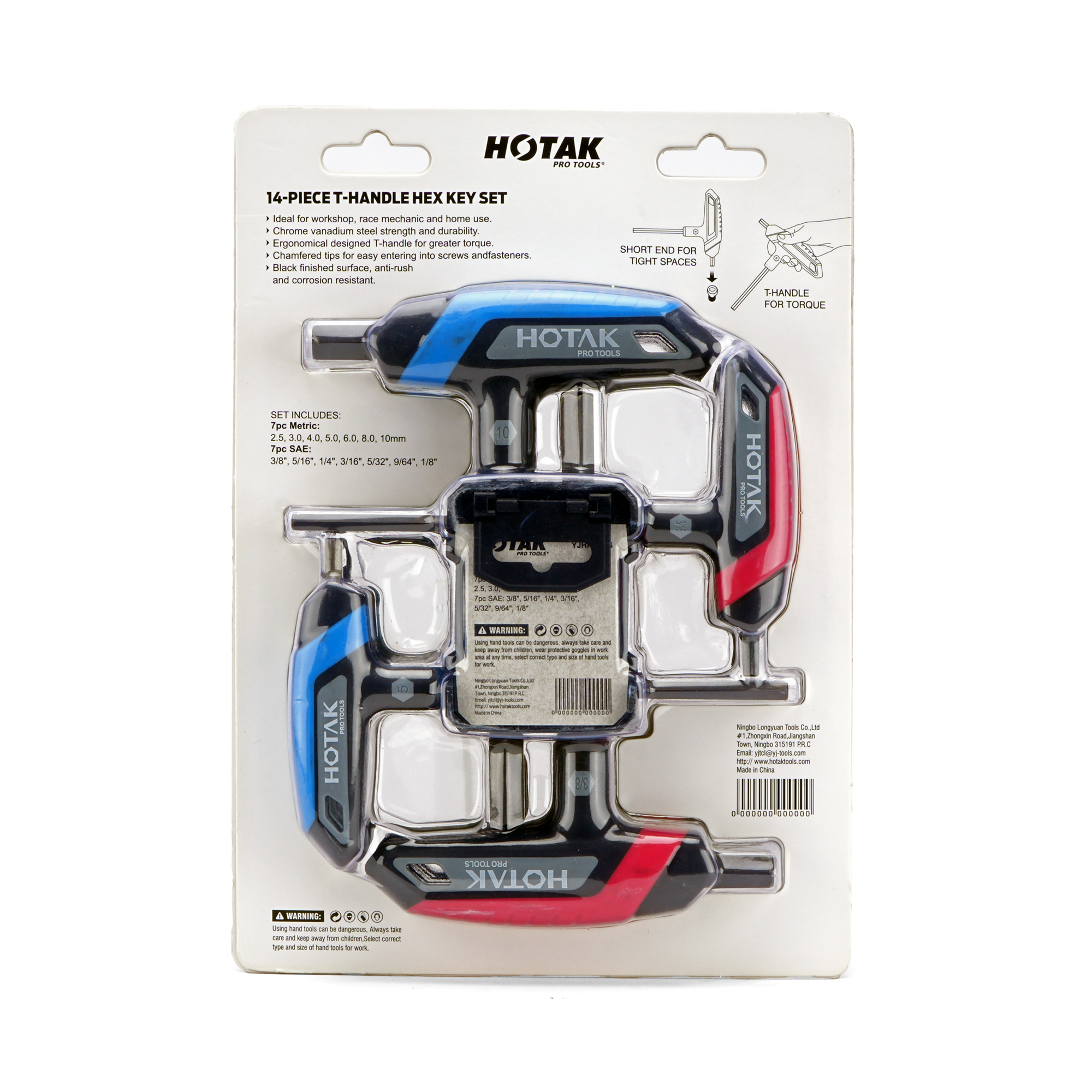
T-handle wrench sets are a separate product family. Their compliance file should name the specific model rather than referencing a shared certificate.
Comparison Table: Document Types and What They Prove
| Document layer | Typical examples | What it supports | What it does not prove |
|---|---|---|---|
| Company-level | ISO9001, BSCI, VPA approval, Walmart and Kingfisher factory audit approvals | Management system discipline, social compliance, factory capability | Product-level safety or market-specific product approval |
| Product-level | Model-specific test reports, declarations, product certifications | Performance or conformity of the named model within its stated scope | Other models, revised designs or other production periods |
| Order-level | Pre-shipment inspection reports, label checks, packaging records | That the specific shipment was produced and inspected as agreed | Ongoing compliance or market access for future orders |
| Requirement type | Example in this category | Buyer action |
|---|---|---|
| Mandatory market-access rule | India Hand Tools QCO 2025 — BIS certification across 9 tool categories | Confirm the certificate exists before shipment; without it, the product cannot be legally placed on that market |
| Voluntary product mark | TÜV/GS German safety certification held at company level | Verify which specific models the mark covers and whether the retail buyer requires it |
| Management-system standard | ISO9001 | Use for supplier qualification; do not file as product safety evidence |
| Social compliance / factory audit | BSCI, Walmart audit, Kingfisher audit, VPA | Use for factory approval and social compliance; request product-level documents separately |
FAQ
Which common industry standards or certifications should hand tools and cordless tools comply with?
Common areas are mechanical safety, electrical safety and chemical restrictions, such as CE/EMC and RoHS for many markets. These are categories of requirement, not a universal checklist. The specific mandatory documents depend on the destination market and the product type. Buyers should confirm the target market first, then request official test certificates covering the relevant areas. Cross-check the product model against the standard reference on the document. Where a supplier's website or catalogue does not list product-level certifications, request the certificates directly during purchasing rather than assuming coverage.
Does a company-level ISO9001 or factory audit certificate cover every product SKU?
No. ISO9001, BSCI, VPA approval and retailer factory audit approvals describe the organization and its processes. They support supplier qualification and factory capability assessment. They do not certify that a specific model meets a product safety standard or a market-access rule. A product-level document naming the model is required in addition to the company-level file.
How should buyers shortlist hand tool manufacturers for professional staple guns?
Shortlisting should combine product capability with documentation discipline. Confirm that the manufacturer offers the relevant staple gun category — professional, heavy-duty, multi-tacker, upholstery, hammer tacker or electric — and that the specific model is supported by product-level documents. Ask for the model-specific documents before sampling, and confirm which destination markets the documents are intended to satisfy. A manufacturer that can answer these questions at the quotation stage is easier to qualify than one that provides certificates only after the order is placed. HOTAK PRO TOOLS, backed by Ningbo Yingzhou Yongjia Electrical Tools Co., Ltd., presents company-level credentials including ISO9001, TÜV/GS, BSCI, VPA and Walmart and Kingfisher factory audit approvals; buyers should still request model-specific product documents for the staple gun models in scope.
What documentation should buyers check when requesting samples?
At the sample stage, buyers should request the product-level document that names the sampled model or family, confirm the document's issue date, and verify that the sample configuration matches the tested configuration. Company-level certificates can be reviewed in parallel, but they should not replace the product-level document. If the sample is a custom or private-label configuration, ask in writing whether the existing product-level document extends to that configuration or whether a new evaluation is required.
How long does it take to assemble a per-SKU compliance file for a custom order?
Timing depends on how many SKUs are in scope, whether the models already have current product-level documents, and whether the destination market imposes a mandatory certification that the supplier does not yet hold. For models with existing documents, the file can usually be assembled from current records during quotation and sampling. For new models or new markets, additional evaluation or certification may be required before shipment. Buyers should ask for a document list at the quotation stage and treat missing mandatory documents as a schedule risk, not a paperwork detail.
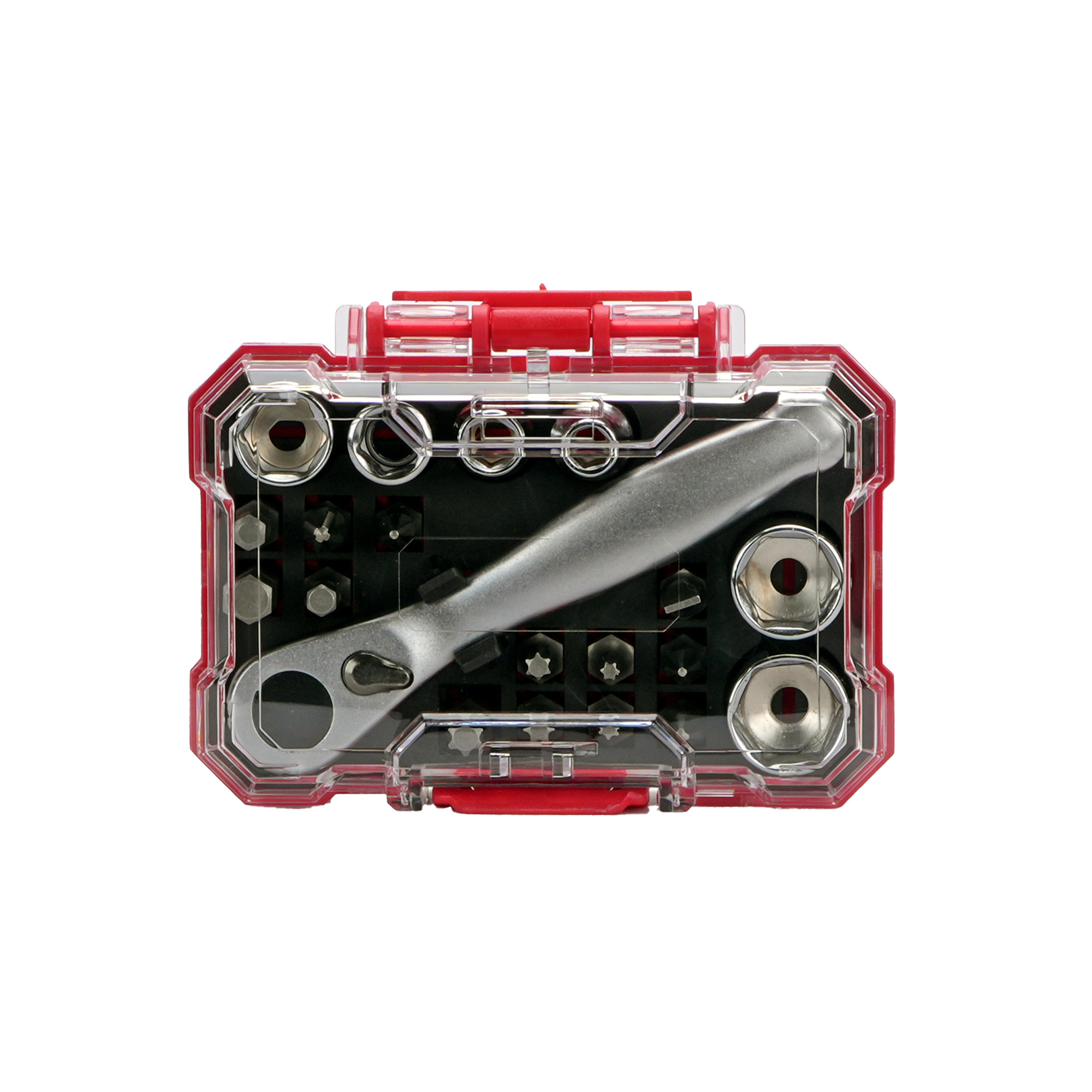
A tool set should be reviewed as a defined configuration. The compliance file should match the set that is actually shipped.
Conclusion: Build the File, Not the Claim
Hand tool compliance is a file-building discipline, not a certificate-collecting exercise. The workable approach is to separate company-level evidence from product-level evidence and order-level inspection, to label each document by the market and model it covers, and to revalidate before each new market or model revision. Buyers who follow this structure can answer the only question that matters at customs or at a retail compliance desk: does this document cover this exact product, in this exact market, for this exact order?
HOTAK PRO TOOLS, backed by Ningbo Yingzhou Yongjia Electrical Tools Co., Ltd., operates an integrated production chain covering mold development, forging, stamping, heat treatment, surface finishing, precision machining, assembly and packaging, and offers ODM/OEM customization. The company's credentials — ISO9001, TÜV/GS, BSCI, VPA, and Walmart and Kingfisher factory audit approvals — are company-level evidence. For any specific tool set, bits set, screwdriver set, staple gun, hex key, folding hex key, T-handle wrench or electric tool, buyers should request the product-level document that names the model and the market.
Request Compliance Documents and Samples
To review product-level documents for a specific model, request a sample, or discuss a private-label hand tool program, contact the HOTAK PRO TOOLS team. The current product catalogue is available for download and includes the model ranges referenced in this guide.
Email: yjtcl@yj-tools.com | Tel / WhatsApp: +86 133-9661-6513
Have Questions or Need More Details?
Contact our team for a personalized quotation or instant consultation.
Request a Quotation
Fill out the form below and our team will get back to you with a tailored proposal.
WhatsApp Direct Chat
Prefer to chat in real-time? Message us on WhatsApp for instant assistance & quick answers.
- Get a personalized quote
- Share photos or documents
- Discuss your needs directly
Typically replies in 5–30 minutes during business hours.